
Digital Marines

Digital Twin Solutions

Digital Marine Systems is a leading provider of Digital Twin solutions for ports, vessels, and offshore assets worldwide, and a trusted name in Marine 3D Laser Scanning and digitalization services. We specialize in advanced 3D digitalization, real-time asset monitoring, and digital twin development for ships, vessels, and yachts.

We deliver a comprehensive range of marine and offshore engineering solutions, including:

 Marine Survey & Inspection

Marine Engineering & Design

Offshore Engineering & Detailed Design

 Retrofitting & Conversion Engineering

Offshore Maintenance Support

3D Laser Scanning & Digitalization Expertise
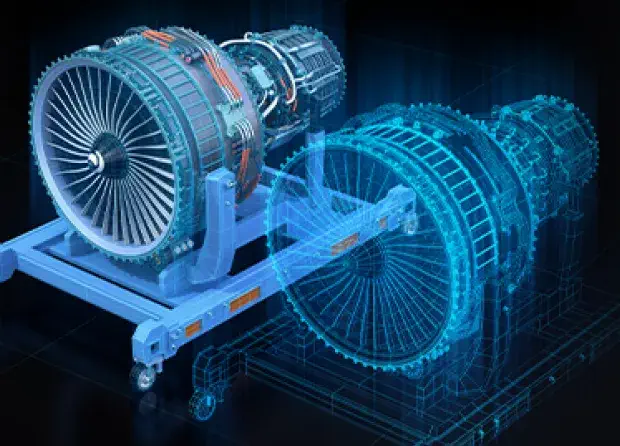
The process of designing a ship requires creativity and accuracy because it is so complicated. Digital twins transform ship design services by giving naval engineers and architects a potent tool to improve collaboration, optimize designs, and streamline procedures. Because of the comprehensive simulations made possible by the virtual replica, naval architects can test various scenarios and evaluate the effects of design modifications prior to their actual implementation. In addition to speeding up the design stage, this feature greatly lowers the possibility of mistakes and expensive changes during the ship building stage. From hull structure to onboard systems, shipbuilders can see the complete vessel, guaranteeing that all the parts work together harmoniously for optimum performance.

Development of Concept, Basic, Detailed, and As-Built Engineering models

 Visualization of onboard piping systems, machinery, and structural layouts

Generation of highly accurate As-Built drawings and documentation

 Seamless integration for retrofit and modification projects

Our detailed engineering approach transforms raw scan data into intelligent 3D models, supporting efficient planning, clash detection, and execution.

Ship
Building

Ports

Ships, Vessels
and Yachts

Digital
Implementation

Digitalization

Digital
Twinning

Digital Twin Services in UAE Ports

A port can be monitored and controlled from anywhere at any time by building a digital twin of the facility. It can be used to improve safety, lower risks, and coordinate in emergency situations like accidents and disasters. This makes port operations more sustainable and increases efficiency. A digital twin allows you to see your port facility in 360° from any perspective, with every piece of equipment digitally depicted in its precise location. Your digital twin allows you to view real-time data about your port facility, giving you instant access to information about the state of your systems. Because a digital twin provides a precise and visual depiction of what is occurring in the facility, port management is made easier.

Port operations are being transformed by digital twins. This digital twin technology is laying the groundwork for smarter, greener, and more efficient ports by accelerating and enhancing collaboration in construction projects, optimizing daily operations, and lowering energy use. However, ports must overcome obstacles like data integration and make sure their teams are prepared for the future in order to reap the full benefits of digital twins. The advantages are obvious: better efficiency, real-time insights, and a more environmentally friendly method of managing port operations.

Frequently Asked Questions?
LSA and firefighting inspections are required by international law under SOLAS Chapter II-2 (Fire Protection, Detection and Extinction) and SOLAS Chapter III (Life-Saving Appliances and Arrangements). These regulations impose a legal duty on shipowners, operators, and masters to ensure all safety equipment is maintained in a state of full operational readiness at all times while the vessel is at sea or in port.

In any maritime emergency — fire, flooding, collision, or grounding — life saving and fire fighting equipment represents the final defense for every person onboard. Equipment that has not been properly serviced, tested, and certified is highly likely to fail at the critical moment it is most needed. Non-compliance can result in vessel detention by Port State Control, invalidation of P&I or H&M insurance, and criminal liability for the Master or responsible officer in the event of an incident.

Inspection intervals are defined by SOLAS and supplemented by flag state and classification society requirements. The main intervals are:

Weekly (Crew-Performed):

  • Visual check of all fire extinguishers — condition, pressure gauge, accessibility
  • Test of fire detection and alarm systems
  • Lifeboat/rescue boat engine test run (minimum 3 minutes in gear)
  • Check of lifeboat general condition, gripes, and release gear

Monthly (Officer-Led):

  • Full inventory check of all LSA — lifejackets, immersion suits, EPIRBs, SARTs
  • Inspection of survival craft, rescue boats, and launching equipment
  • Test of all fixed fire suppression system controls
  • Check of all fire detection detectors and alarm panels

Annual (Approved Service Provider + Class):

  • Full inspection and certification of all fire extinguishers
  • CO2 system annual inspection with pressure checks
  • Inspection and certification of lifejackets, immersion suits, SCBA, EEBD
  • Calibration of gas detectors, pressure gauges and UTI meters

Five-Yearly (Maker-Approved + Class Witnessed):

  • CO2 system cylinder hydrotesting
  • Foam sample laboratory analysis
  • Sprinkler and water mist system five-year survey
  • Lifeboat falls wire renewal or end-for-end turning

PSC inspections regularly identify the following deficiencies, many of which result in vessel detention:

  • Expired annual service certificates for fire extinguishers or LSA
  • Fire extinguishers not accessible, obscured, or missing seals/pins
  • CO2 system weight loss beyond permitted tolerance (>5% of total charge)
  • Lifeboat engine failure to start during test
  • Worn, kinked, or expired falls wire on davit systems
  • Immersion suits with cracked seals, broken zips, or expired pressure test dates
  • Inflatable lifejacket cylinder not correctly fitted or expired
  • SCBA units with low or expired air cylinders
  • EEBD units with expired or near-expiry battery/cylinder
  • Fire detection system faults showing on main panel — unresolved alarms
  • Missing or expired pyrotechnics (flares) in lifeboats
  • EPIRB or SART with expired battery or failed self-test

Maintaining a structured planned maintenance system (PMS) linked to your service provider’s schedule is the most effective way to avoid these deficiencies.

SOLAS and IMO guidelines require that annual and five-yearly inspections of most LSA and fire fighting equipment are performed by qualified, approved service providers, not the ship’s crew alone. The specific requirements are:

  • Fire extinguishers and fixed systems: Approved service companies holding the relevant manufacturer authorizations and class society endorsements
  • Inflatable lifejackets and immersion suits: Class approved service stations for inflatable equipment 
  • SCBA and breathing apparatus: Class approved service stations for breathing apparatus inspection & service. 
  • CO2 fixed systems: Companies approved under classification body and technicians proficient on the make & model of the systens
  • Lifeboat and davit systems: Maker & classification body approved service stations as required by MSC/Circ.1206/Rev.1

In all cases, the certifying technician must be able to demonstrate current approval status from the relevant classification society and/or equipment manufacturer. This is the certificate that PSC inspectors and Class surveyors will request.

In practice, most flag states delegate their statutory survey functions to recognized Classification Societies. For LSA and firefighting equipment, the Class surveyor may witness annual or five-yearly service inspections and sign off on service certificates as part of the vessel’s annual or renewal survey.

The main types of portable and semi-portable fire extinguishers found onboard vessels and offshore installations are:

  • Dry Powder (DP) Extinguishers: Available in 2 kg, 6 kg, 9 kg, 12 kg, 25 kg, and 50 kg sizes. Used for Class A (solid), Class B (liquid), and Class C (gas) fires. Extremely common on engine rooms, cargo decks, and machinery spaces.
  • CO2 (Carbon Dioxide) Extinguishers: Available in 2 kg, 5 kg, and 10 kg sizes. Used primarily for electrical fires (Class E) and Class B fires. Found in electrical switchboard rooms, server rooms, and galleys.
  • Foam Extinguishers (AFFF): Available in 9 litres, 45 litres, and 135 litres. Effective for Class A and Class B fires. Common in engine rooms, pump rooms, and cargo handling areas.
  • Wet Chemical Extinguishers: Used specifically for Class F (cooking oil/fat) fires. Mandatory in commercial galley spaces on SOLAS vessels.
  • Water Mist Extinguishers: Used for Class A and some electrical fires. Increasingly common as an environmentally clean alternative.

Each extinguisher type has specific inspection, testing, and refilling requirements, and must be appropriate for the fire risk in the space where it is located.