Digital Marines

MARINE

SAFETY

We provides always our best marine safety solution for our clients and always try to achieve our client's trust and satisfaction.

Read More
Partnering with the world’s leading enterprises

Your Certified Partner in

Marine Safety & Innocation.

Digital Marine Systems, an ISO 9001:2015 certified company has been servicing marine industry as the most trusted supply and service provider for Fire Fighting & Life Saving Equipment for onshore and offshore facilities in an innovative way.
About Us

The Complete Marine Safety Lifecycle:

Equipment, Service & Support

Digital Marine Systems provides a complete solution for LSA & FFA needs. With extensive inventory and expertise, we ensure compliance and guarantee your fleet’s safety.
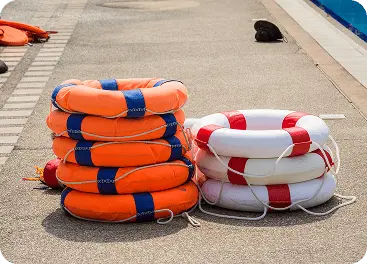
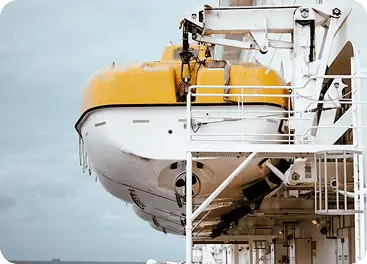
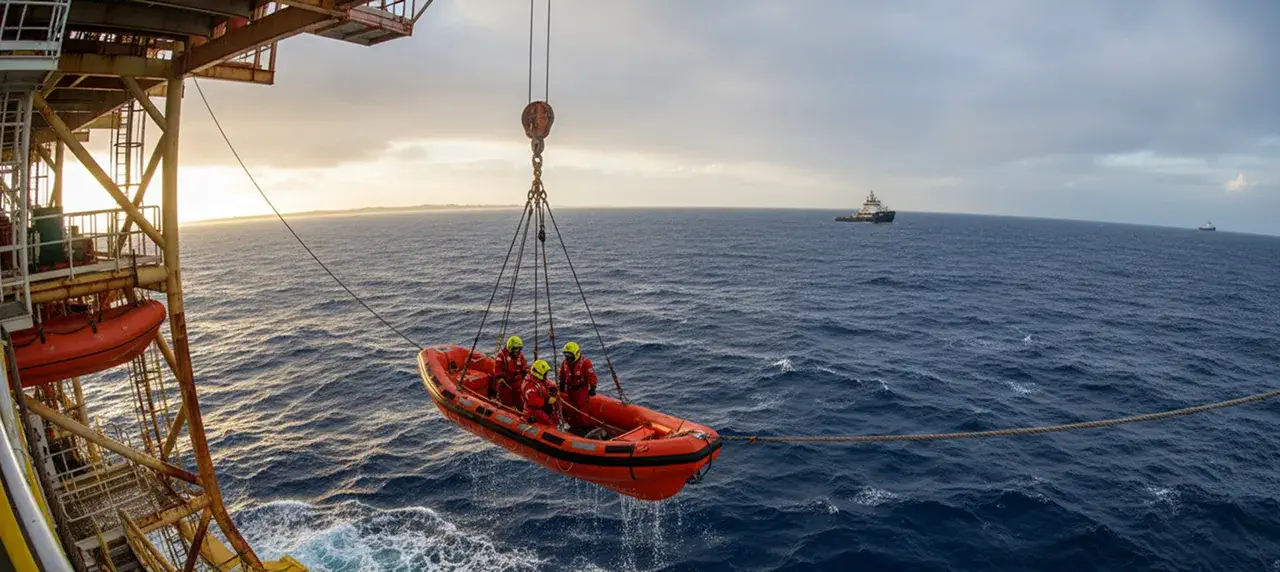
Life Crafts

Life Rafts

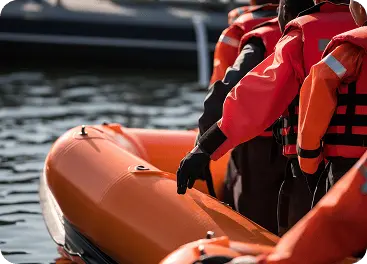
Approved Liferaft Service, Repair & Inspection center. Authorized Liferaft Service Center

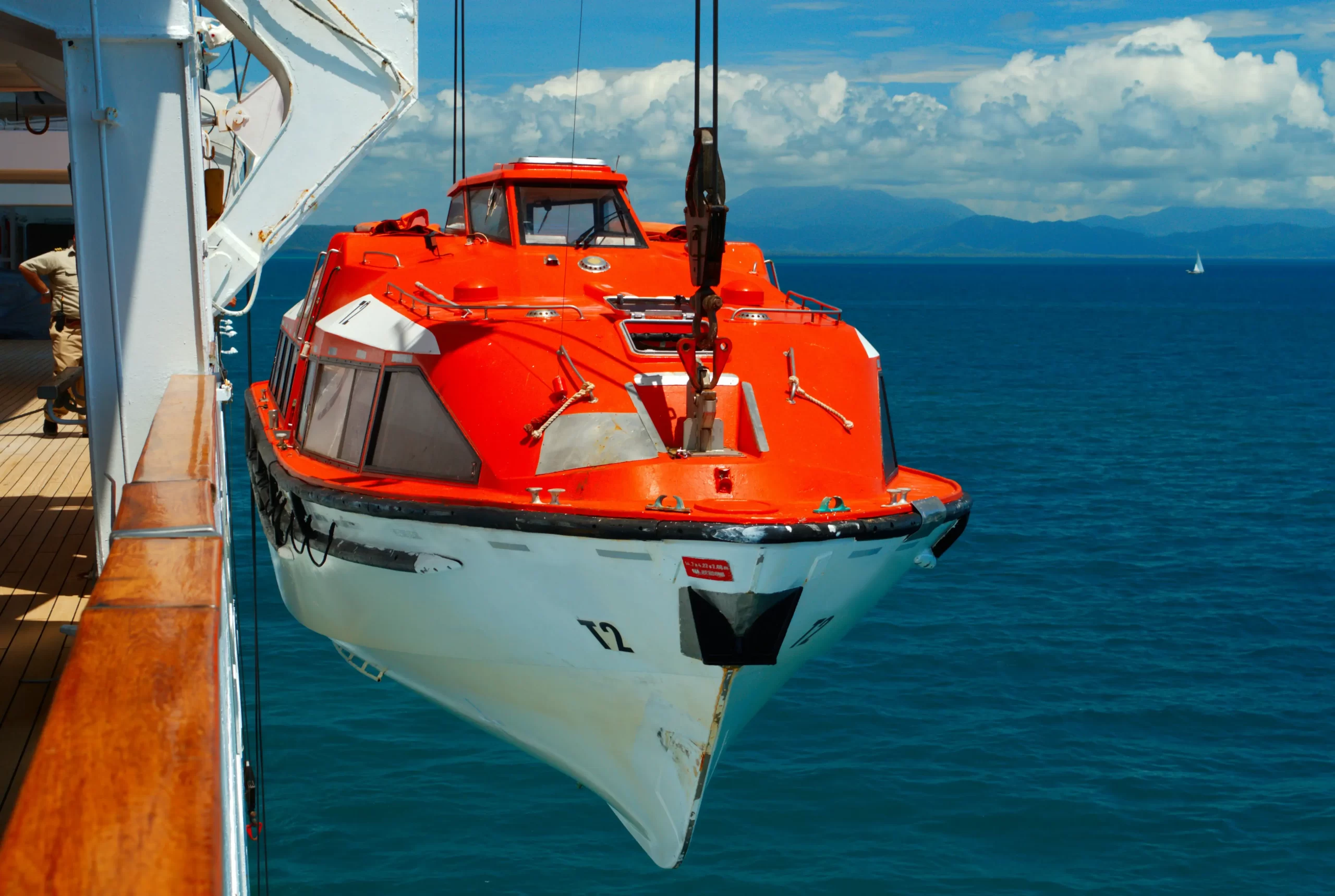
Life Boats

Annual and five yearly inspection, Certification of Lifeboat, Rescue boat, Davit & Winches

Fire Fighting Equipment

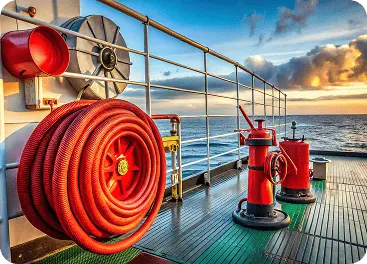
Inspection, servicing and certification of Fire Fighting Equipment.

Life Saving Equipment

Inspection, servicing and certification of Life Saving Equipment.

Marine Deck Equipment

Middle East’s Leading Stockiest & Distributor of Marine Equipment for Marine & Offshore Industries.

Breathing Apparatus Servicing

Inspection, servicing & certification of Breathing Apparatus and EEBD.

Life Saving Equipment

Inspection, servicing and certification of Life Saving Equipment.

Fire Fighting Equipment

Inspection, servicing and certification of Fire Fighting Equipment.

Ship Deck Equipment

Middle East’s Leading Stockiest & Distributor of Marine Equipment for Marine & Offshore Industries.

Life Crafts

Industrial Safety Equipment

Approved Liferaft Service, Repair & Inspection center. Authorized Liferaft Service Center

Distress Signals Signs & Flags

Annual and five yearly inspection, Certification of Lifeboat, Rescue boat, Davit & Winches

Expert Servicing for

Fire & Life-Saving Systems

Our 24/7 team has over 20 years of experience at major ports, ensuring your facilities are compliant and safe. We offer rapid equipment deployment and expert maintenance for your fleet.
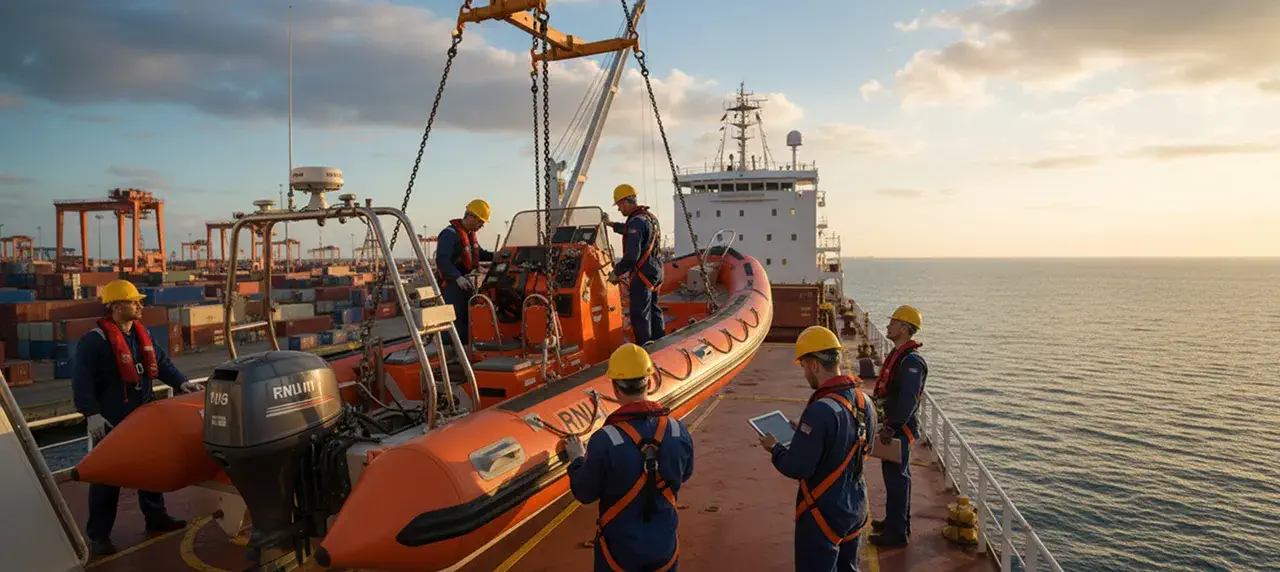
Life Saving Equipment

Whether on a commercial vessel or yacht, servicing and maintaining your life-saving equipment per manufacturer’s guidelines is essential for safety on your boat.

Fire Fighting Equipment

Whether on a commercial vessel or yacht, servicing and maintaining your life-saving equipment per manufacturer’s guidelines is essential for safety on your boat.

Blog Updates

The Five-Year Lifeboat Service: What It Involves and Why It Must Be Done Right

The Future of Marine Life-Saving: Technology, Regulations, and What’s Coming Next

Port State Control Inspections: The Life-Saving Appliance Deficiencies That Lead to Detention

Lifeboat On-Load Release Gear: A Safety-Critical System That Demands Expert Attention

The Five-Year Lifeboat Service: What It Involves and Why It Must Be Done Right

The Future of Marine Life-Saving: Technology, Regulations, and What’s Coming Next

Port State Control Inspections: The Life-Saving Appliance Deficiencies That Lead to Detention

Frequently Asked Questions?

LSA and firefighting inspections are required by international law under SOLAS Chapter II-2 (Fire Protection, Detection and Extinction) and SOLAS Chapter III (Life-Saving Appliances and Arrangements). These regulations impose a legal duty on shipowners, operators, and masters to ensure all safety equipment is maintained in a state of full operational readiness at all times while the vessel is at sea or in port.

In any maritime emergency — fire, flooding, collision, or grounding — life saving and fire fighting equipment represents the final defense for every person onboard. Equipment that has not been properly serviced, tested, and certified is highly likely to fail at the critical moment it is most needed. Non-compliance can result in vessel detention by Port State Control, invalidation of P&I or H&M insurance, and criminal liability for the Master or responsible officer in the event of an incident.

Inspection intervals are defined by SOLAS and supplemented by flag state and classification society requirements. The main intervals are:

Weekly (Crew-Performed):

  • Visual check of all fire extinguishers — condition, pressure gauge, accessibility
  • Test of fire detection and alarm systems
  • Lifeboat/rescue boat engine test run (minimum 3 minutes in gear)
  • Check of lifeboat general condition, gripes, and release gear

Monthly (Officer-Led):

  • Full inventory check of all LSA — lifejackets, immersion suits, EPIRBs, SARTs
  • Inspection of survival craft, rescue boats, and launching equipment
  • Test of all fixed fire suppression system controls
  • Check of all fire detection detectors and alarm panels

Annual (Approved Service Provider + Class):

  • Full inspection and certification of all fire extinguishers
  • CO2 system annual inspection with pressure checks
  • Inspection and certification of lifejackets, immersion suits, SCBA, EEBD
  • Calibration of gas detectors, pressure gauges and UTI meters

Five-Yearly (Maker-Approved + Class Witnessed):

  • CO2 system cylinder hydrotesting
  • Foam sample laboratory analysis
  • Sprinkler and water mist system five-year survey
  • Lifeboat falls wire renewal or end-for-end turning

PSC inspections regularly identify the following deficiencies, many of which result in vessel detention:

  • Expired annual service certificates for fire extinguishers or LSA
  • Fire extinguishers not accessible, obscured, or missing seals/pins
  • CO2 system weight loss beyond permitted tolerance (>5% of total charge)
  • Lifeboat engine failure to start during test
  • Worn, kinked, or expired falls wire on davit systems
  • Immersion suits with cracked seals, broken zips, or expired pressure test dates
  • Inflatable lifejacket cylinder not correctly fitted or expired
  • SCBA units with low or expired air cylinders
  • EEBD units with expired or near-expiry battery/cylinder
  • Fire detection system faults showing on main panel — unresolved alarms
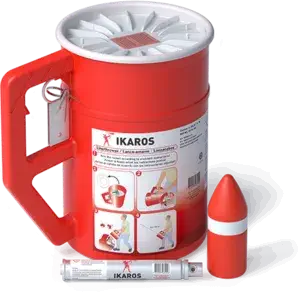
  • Missing or expired pyrotechnics (flares) in lifeboats
  • EPIRB or SART with expired battery or failed self-test

Maintaining a structured planned maintenance system (PMS) linked to your service provider’s schedule is the most effective way to avoid these deficiencies.

SOLAS and IMO guidelines require that annual and five-yearly inspections of most LSA and fire fighting equipment are performed by qualified, approved service providers, not the ship’s crew alone. The specific requirements are:

  • Fire extinguishers and fixed systems: Approved service companies holding the relevant manufacturer authorizations and class society endorsements
  • Inflatable lifejackets and immersion suits: Class approved service stations for inflatable equipment 
  • SCBA and breathing apparatus: Class approved service stations for breathing apparatus inspection & service. 
  • CO2 fixed systems: Companies approved under classification body and technicians proficient on the make & model of the systens
  • Lifeboat and davit systems: Maker & classification body approved service stations as required by MSC/Circ.1206/Rev.1

In all cases, the certifying technician must be able to demonstrate current approval status from the relevant classification society and/or equipment manufacturer. This is the certificate that PSC inspectors and Class surveyors will request.

In practice, most flag states delegate their statutory survey functions to recognized Classification Societies. For LSA and firefighting equipment, the Class surveyor may witness annual or five-yearly service inspections and sign off on service certificates as part of the vessel’s annual or renewal survey.

The main types of portable and semi-portable fire extinguishers found onboard vessels and offshore installations are:

  • Dry Powder (DP) Extinguishers: Available in 2 kg, 6 kg, 9 kg, 12 kg, 25 kg, and 50 kg sizes. Used for Class A (solid), Class B (liquid), and Class C (gas) fires. Extremely common on engine rooms, cargo decks, and machinery spaces.
  • CO2 (Carbon Dioxide) Extinguishers: Available in 2 kg, 5 kg, and 10 kg sizes. Used primarily for electrical fires (Class E) and Class B fires. Found in electrical switchboard rooms, server rooms, and galleys.
  • Foam Extinguishers (AFFF): Available in 9 litres, 45 litres, and 135 litres. Effective for Class A and Class B fires. Common in engine rooms, pump rooms, and cargo handling areas.
  • Wet Chemical Extinguishers: Used specifically for Class F (cooking oil/fat) fires. Mandatory in commercial galley spaces on SOLAS vessels.
  • Water Mist Extinguishers: Used for Class A and some electrical fires. Increasingly common as an environmentally clean alternative.

Each extinguisher type has specific inspection, testing, and refilling requirements, and must be appropriate for the fire risk in the space where it is located.